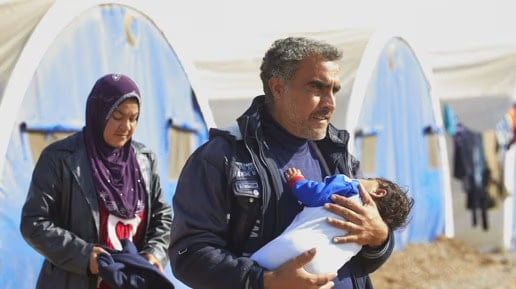
Regina Lynch, the Executive President of Aid to the Church in Need (ACN), just returned from visiting ACN’s national offices in Latin America. She toured Chile, Brazil, Colombia, and Mexico, and learned more about the challenges these countries currently face.
You recently visited the national offices in Latin America. What was your goal?
I wanted to visit these offices because these countries used to receive aid from ACN but now contribute to fundraising efforts. It’s remarkable how donors there look beyond their own struggles and help Christians in other countries who have it worse.
Your first stop was Chile. What’s happening there?
Chile was the first Latin American country ACN helped; this started in 1962. It’s a challenging environment, with political turmoil, Church scandals, and, since 2019, arson attacks on churches. But our donors there step up because they understand the difficulty of their own circumstances.
In Chile, our focus is educating seminarians and laypeople. We’re also helping to renovate churches damaged by the arson attacks.
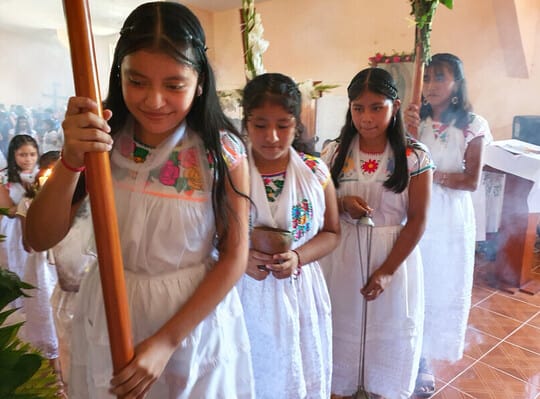
What impressed you the most during your visit to Chile?
We visited impoverished parishes that are dealing with violence due to the drug trade. But it was inspiring to see new religious communities, even from other countries, working closely with the poor and spreading hope through their faith.
Next, you visited Brazil, a country ACN has been involved with for years.
Yes, since the 1960s. About 25 years ago, we opened a national office to explore the idea of Brazil becoming a donor country, which it has been a success. What’s remarkable is that many of our donors in Brazil are quite poor, with an average donation of about $4. Some even live in slums and make sacrifices to support ACN, just like the parable of the widow’s mite.
You mentioned poverty in Brazil. What other challenges does the Church face there?
While Catholics still make up a majority of the country, the Catholic population is decreasing annually, as many are turning to evangelical sects. There’s also the violence of the drug trade. However, I was impressed by the new ecclesiastical movements and the priests who work in challenging environments, doing vital evangelization work.
You then visited Colombia. What’s noteworthy about this country?
Colombia has many priestly vocations, but it has also experienced significant violence due to guerrilla warfare and drug-related issues. The Church plays a crucial role in supporting Venezuelan refugees.
Your tour concluded in Mexico, where several priests have been murdered recently.
Mexico is one of the most dangerous countries for priests because of organized crime, anti-clericalism, and a history of Church persecution. ACN is supporting a national dialogue about peace, especially after the assassination of two Jesuits. The Church also provides extensive assistance to migrants traveling through Mexico, often facing violence from various groups.
—Filipe d’Avillez