The number of churches attacked or vandalized in Europe and the Americas continues to rise, while Christians often lack the legal instruments to fight back against discrimination and persecution.
Christians suffer persecution and limits to their religious freedom in many parts of the world, with increasing violence and hostility in Africa and Asia. But Europe and the Americas also face problems, though the ruling authorities tend not to take action.
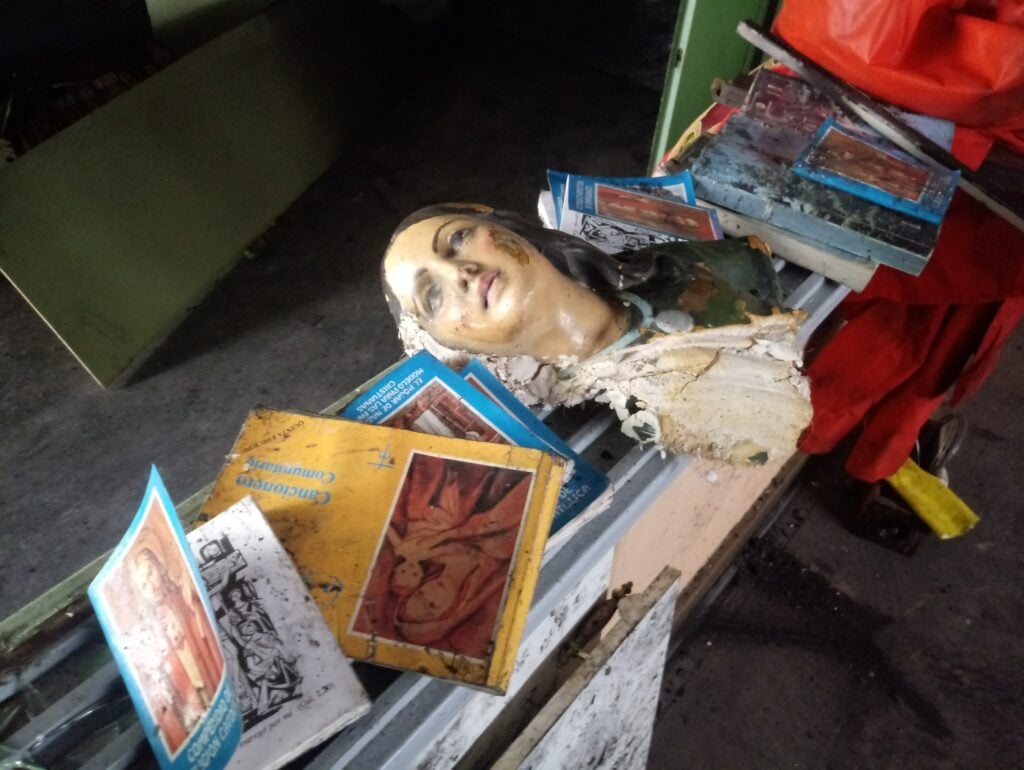
José Luis Bazán, an academic and specialist in human rights and anti-Christian persecution, contributed to Aid to the Church in Need’s Religious Freedom in the World Report (RFR), published in October 2025. He said that an average of 1,000 attacks take place against churches in France annually. Mostly it’s vandalism, he said, “but this also includes many cases of arson.”
“Hundreds of attacks have also been registered in the USA, with 371 alone since the Supreme Court overturned Roe v. Wade in 2022,” Bazán adds.
Several countries in Latin America have also witnessed an increase in attacks in recent years. “Nearly 300 churches in Chile have suffered arson attacks between 2013 and 2024, mostly by far-left activists,” Bazán says. “Every year, around March 8, International Women’s Day, hundreds of churches – I repeat, hundreds – in Spain and Latin America are graffitied and vandalized by radical feminists with hate expressions such as, ‘The church that shines the brightest is the one which burns.’”
Despite the fact that this sort of violence against Christians is becoming so common that it can be described as a trend, the authorities are doing almost nothing to protect the victims, Bazán says. “The European Union has a coordinator on anti-Semitism and another on anti-Muslim hatred. There is also a recently created post at the UN for anti-Muslim hatred, as there was already one for anti-Semitism. Why not a UN representative for anti-Christian hatred? We lack political instruments at the EU level and at the United Nations.”
An unrealistic presumption?
“There is a presumption that we are the majority, and therefore, by definition, we cannot be oppressed, we cannot be attacked. But there are subcategories, and some people or institutions are attacked, and we know that minorities can also be aggressive and can attack majorities.”
However, Bazán also says that the fault lies partly with the Christians themselves, who do not make official complaints. “A survey among Catholic priests in Spain found that many of them had been attacked either physically or verbally, but most of them did not report it, maybe because they feel that they should accept this as a part of the sacrifice of their ministry. The problem is the same for laypersons: the majority of Christians, unless it is a very serious crime, do not report hate speech. This is not happening with other religious communities. For example, the British Muslim community produced a handbook on how to report, with examples of which should be reported, including minor offenses.”
“I think that we have much to learn, because the political leadership makes laws and policies on what you present as reported cases, not allegations,” Bazán concludes.
The RFR, which Bazán helped produce, found that around two thirds of the world’s population live in countries with high restrictions on religious freedom. The report is published every two years by ACN.
– Filipe d’Avillez