
From Persecution to Freedom: One Catholic's Journey to America
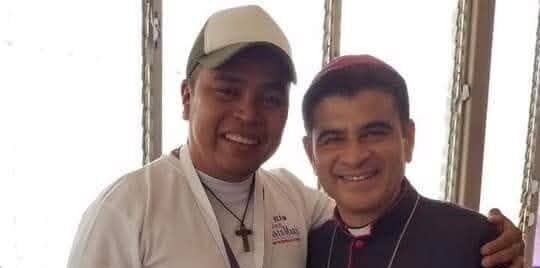
Denis Alaniz never imagined that living his Catholic faith would cost him his homeland. After imprisonment and threats from an oppressive regime, he fled to the United States in search of the freedom so many take for granted. Today, he continues to speak for the faithful who cannot.
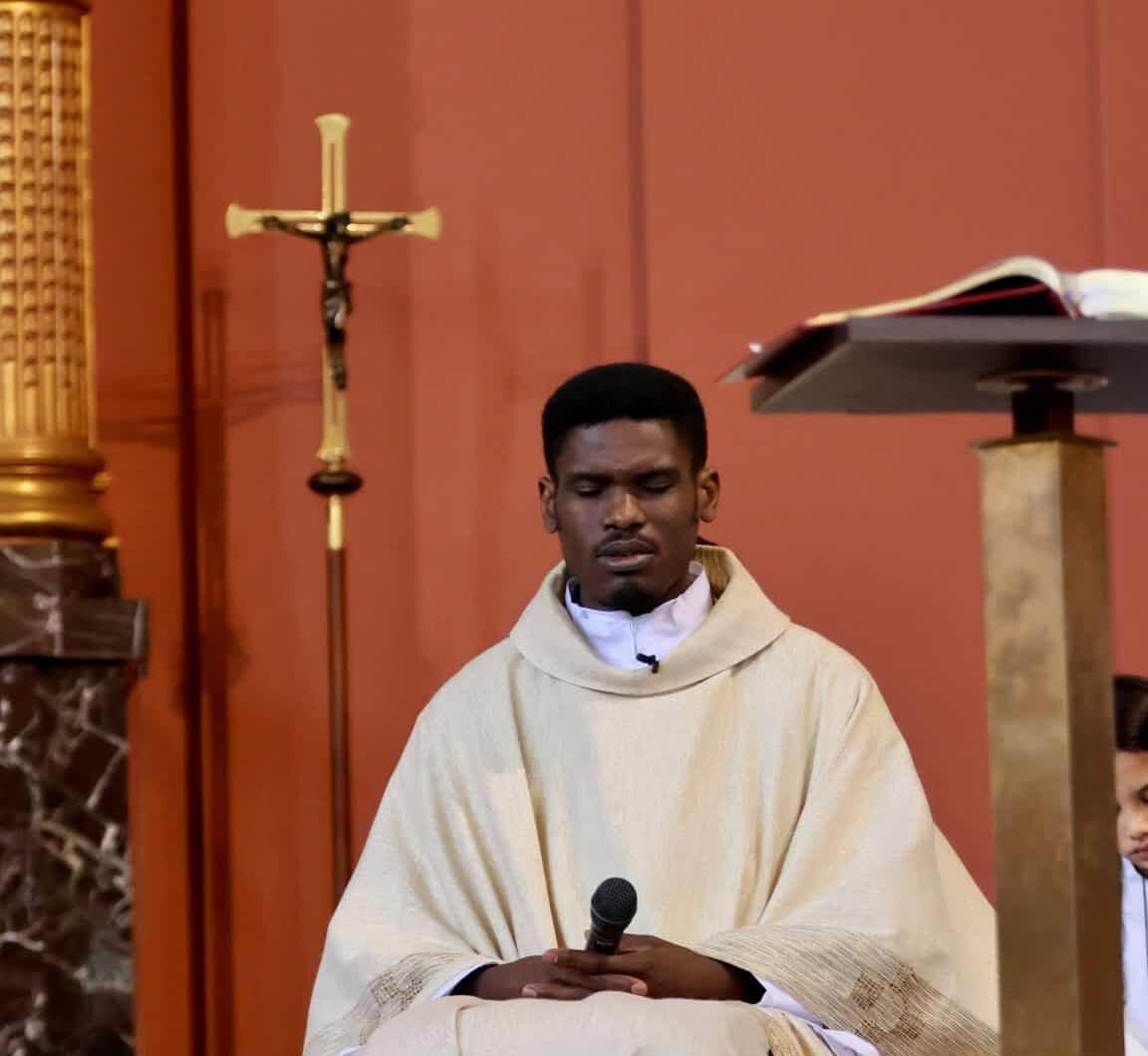
Nigerian Priest Speaks of America and Hope for Religious Freedom
He watched his fellow seminarian die in a terrorist attack that changed his life forever. Now, after years of living under the constant threat of violence in Nigeria, one young priest has found something many take for granted in America: the freedom to worship without fear.
Archbishop Gabriele Caccia - Apostolic Nuncio
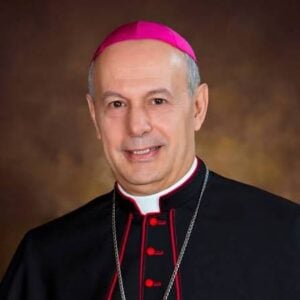
“As the United States prepares to commemorate the 250th anniversary of the Declaration of Independence, it is fitting to give thanks for the ideals that have shaped the nation’s history, especially human dignity, religious liberty, and the conviction that the rights of the person are rooted in the Creator.
I am grateful to Aid to the Church in Need for this initiative and for its continued witness on behalf of suffering Christians throughout the world. May this anniversary renew in us the commitment to uphold human dignity and to work together for solidarity and peace. “
Timothy Cardinal Dolan - Archbishop Emeritus of New York
 “This providential celebration of our 250th prompts us to praise “the God in whom we trust” for our “first and most cherished freedom,” religious liberty! My brother cardinals with me in Rome as I write this constantly thank me and the other American cardinals for our advocacy of religious freedom, telling me they are bolstered by our example, and deeply appreciate our defense of persecuted religious minorities around the globe. God bless America! God bless Aid to the Church in Need! “
Bishop Michael Sis - Bishop, Diocese of San Angelo in Texas
”As Christians, we can serve as the ‘conscience of society.’ We participate, critically evaluate, challenge, and call to account. We seek to permeate and transform the world for Christ. We bring the seed of Christian truth to the social order. An anonymous Christian patristic writer in the second century A.D. wrote in his Letter to Diognetus, ‘What the soul is to the body, let Christians be to the world…’ As we celebrate the 250th birthday of our country, all of us would do well to do an examination of conscience regarding our own fulfillment of the duties of responsible citizenship.”
Bishop Edward Malesic - Bishop, Diocese of Cleveland
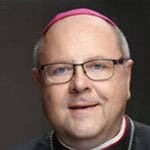
“One of the greatest ways we can celebrate this historic anniversary – the birth of our nation – is not simply by remembering the past and honoring our heroes, but by building a future rooted in faith, charity, and hope. The generations that came before us laid the foundations of this country through courage, sacrifice, and trust in God. We honor their legacy and build on their shoulders by doing the same in our own time. As Christians, we know that freedom is one of God’s greatest gifts. He created us with free will, allowing us to choose the path we will follow. Every day we arrive at countless crossroads where we must decide whether to seek our own desires or to seek God’s will. May we use the freedom God has given us wisely. May we choose the path that leads us toward him and toward one another. And may our lives help build not only a stronger nation, but also the Kingdom of God on earth and in our great country.”
Bishop A. Elias Zaidan - Bishop, Maronite Eparchy of Our Lady of Lebanon of Los Angeles
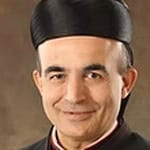
“As the United States celebrates its 250th birthday, we are called to consider our country’s leadership throughout the world, as well as our moral obligations as citizens of our great nation. As Our Lord said, “To whom much is given, much will be required” (Luke 12:48). Let us remember, especially, our Christian brothers and sisters suffering persecution all over the world, especially in the Middle East, Africa, and Asia. Let us pray for them, accompany them, and, crucially, speak for them in the centers of power, both here in the United States, and all over the world.”
Bishop James D. Conley - Catholic Diocese of Lincoln
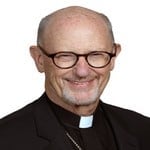
“As we commemorate the 250th anniversary of the signing of the Declaration of Independence, we thank God for the freedoms he has bestowed upon us in this great country. Freedom, though, also brings with it responsibility. We must stand for human dignity. We must protect the most vulnerable in our society. We must love our neighbor, even when it’s difficult. We call upon our Creator for the courage and strength to defend these values. We recognize God is the only path to true freedom in our lives. Let us be thankful today that we live in a country that allows us to walk that path and pray we never stray from it.”
Bishop Gregory Mansour - Diocesan Bishop, Maronite Eparchy of Saint Maron of Brooklyn
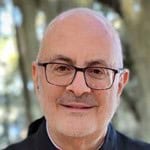 “The saints and blesseds of the United States are a source of great inspiration. Men, women, youth, lay, religious, and clergy as well as different ethnic backgrounds make the saints from the USA among the most diverse and interesting. They tell the great story of America. Aid to the Church in Need, CNEWA, the Papal Fund, as well as many other Catholic charitable institutions are among the most generous in the world. As a Maronite Catholic Bishop I see the work done by these agencies overseas and I am so very grateful for American Catholic generosity.”
Archbishop Gustavo García-Siller, MSpS - Archdiocese of San Antonio
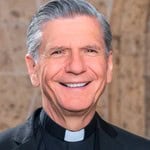 We give thanks for the 250th anniversary of the United States, founded on the conviction that all are created equal. For the local Church in San Antonio, this year carries additional significance. Three days before the elevation of San Antonio to an archdiocese in 1926, the Cristero War erupted in Mexico, driving thousands of faithful families, clergy, and religious communities into south Texas in search of freedom to worship. In that moment the Holy Spirit inscribed a founding charism into the identity here: the Archdiocese of San Antonio became refuge for those with nowhere to turn.
The Church of Mexico and the Church of the United States together built refuge in the very hour of persecution. One hundred years on, we continue to live that charism. The Archdiocese of San Antonio not only honors a rich past but takes pride in its identity as a place of encounter, where peoples, faiths, languages, and cultures were shaped by each wave of newcomers who have made this place home, including recent arrivals from around the world. We have learned that our brothers and sisters in migration are not problems to be solved but the living presence of the Lord, a gift the Holy Spirit continues to bestow upon the Church and country. In this 250th anniversary year of our nation, we are proud to welcome these missionaries of God’s love.
Archbishop Salvatore Cordileone - Archbishop of San Francisco in California
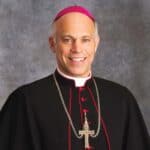
Essay on Religious Liberty for Aid in the Church in Need
As we celebrate the 250th anniversary of our nation’s founding, we give thanks to almighty God for the countless blessings He has bestowed upon our country. We are grateful for the gift of freedom, for the sacrifices of those who have gone before us, and for the opportunity to continue building a society rooted in justice, charity, and the common good.
The American experiment has been distinctive among the nations of the world. While our Founders drew from many intellectual traditions, they were also deeply influenced by principles of the natural law that have long been preserved and articulated within the Christian tradition. They recognized that our rights come not from the state but from our Creator, and they established a constitutional order that distinguished the legitimate roles of civil authority and religious authority while providing robust protection for the free exercise of religion. In doing so, they charted a course different from movements that sought to subordinate or suppress religious belief.
Religious liberty remains essential to the flourishing of our nation for at least two important reasons.
First, faith enables us to see beyond the passions and ideologies of any particular moment. As believers, we are guided by enduring truths that transcend every age, culture, and political climate. These truths, illuminated by the Gospel and grounded in the natural law, form our consciences and help us recognize both truth and error. Because of original sin, every society—including our own—is capable of injustice. Yet a people formed by faith and conscience possesses the moral resources to acknowledge wrongdoing, repent, and pursue what is right.
Our nation’s Judeo-Christian heritage has helped inspire generations to confront injustices that contradicted our founding ideals. The long struggle against slavery, the dismantling of segregation, the pursuit of equal dignity for every human person, and the rejection of religious and ethnic prejudice all remind us that authentic freedom requires a moral compass. As Catholics, we are called not simply to follow the prevailing currents of our time, but to seek what is true, just, and ordered toward the common good.
Second, the Founders understood that political freedom depends upon personal virtue. A free people can govern themselves as a society only if each member learns to first govern themselves personally. Democracy cannot endure if honesty gives way to corruption, responsibility to selfishness, or respect for others to contempt and division. For this reason, the Founders recognized that religious liberty was not merely a private privilege but a public good. Faith communities cultivate the virtues upon which a healthy democracy depends: honesty, integrity, compassion, generosity, fidelity, self-discipline, respect for others, love of neighbor, and a genuine spirit of service to one’s country. These virtues strengthen families, communities, and the civic life of our nation.
Today, one of our greatest challenges is recovering a sense of shared moral purpose. Every society requires certain common values if it is to remain united. Our nation is experiencing deep polarization, in part because we no longer agree on many of the fundamental truths about the human person, the family, freedom, and the common good. Many people continue to draw upon the wisdom of the Judeo-Christian tradition, while others embrace a secularized and relativistic worldview that often leaves little room for religious perspectives in public life. Genuine pluralism, however, requires more than mere tolerance; it requires a willingness to respect the rights of those with whom we disagree.
As religious participation declines, there is also a growing temptation to look to government to answer questions that properly belong to families, communities, and faith. The Founders wisely understood that civil government, while necessary and good, must also be limited. Religious communities serve an indispensable role in forming conscience, strengthening civil society, and reminding both citizens and their leaders that every human authority is accountable to a higher moral law. In this way, they help safeguard the dignity and freedom of every person.
The Constitution’s steadfast protection of religious liberty remains one of the great strengths of our Republic. It is a safeguard not only for people of faith but for every citizen, because wherever the freedom to live and practice one’s deeply held convictions is protected, human dignity is honored and the concentration of unchecked power is restrained. When governments are tempted to exceed their proper authority, vibrant religious communities serve as an important counterbalance, reminding society that the dignity and rights of the human person come not from the state but from God. In this way, religious liberty protects the freedom of all people, not only those who profess a particular faith. Religious liberty is not simply a benefit for believers; it is one of the essential pillars of a free, just, and flourishing society.
As we mark this historic anniversary, may we renew our commitment to be faithful disciples of Jesus Christ and faithful citizens of our nation. Let us pray that God will continue to bless the United States of America, granting our leaders wisdom, our citizens virtue, and our country the grace to pursue justice, preserve liberty, and seek the common good under His providential care.
Ukrainian Catholic Bishops of the United States
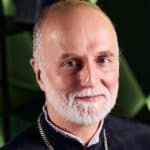
On Dignity and Freedom: A Pastoral Letter of the Ukrainian Catholic Bishops of the United States for the 250th Anniversary of American Independence
July 02, 2026
Our preamble
As the United States celebrates 250 years of independence, we, the Ukrainian Catholic Bishops of the United States, offer these reflections on America’s founding ideals, on the Ukrainian community that has been part of this nation’s story for seven score years, and on the responsibility of each generation of Americans, including the present one, to safeguard and renew the freedoms with which it has been entrusted.
From its beginning, the American experiment has rested on the belief that every person possesses certain inalienable qualities and rights simply because he or she is a human willed into being by God. As bishops, we affirm this God-given dignity and these inherent rights. God created each of us out of love, conferring immeasurable value upon every “unique and unrepeatable” person, as St. John Paul II reminds us. The love of Christ, most fully revealed on the Cross, is not only the source of our salvation, but also the foundation of human dignity and the basis for the rights that belong to every person.
Rooted in the enduring teachings of the Gospel, we offer these reflections as Ukrainian Catholics and as Americans. We look to the moral vision that helped shape the United States, the legacy of the Ukrainian-American faithful who came before us, the witness of Ukraine today, and the challenges facing the United States in the present moment.
Above all, we wish to offer a practical invitation, a call to action: to bring the love of Christ into daily life, into our families, our communities, and our civic responsibilities. Only such love can leaven our political inheritance and social life, providing the basis for renewal, both personal and national. Only such love can revive our hearts, strengthen our common life, and foster a society that reflects the dignity of every human person.
America as a Moral Project
“We hold these truths to be self-evident, that all men are created equal,
that they are endowed by their Creator with certain unalienable Rights,
that among these are Life, Liberty and the pursuit of Happiness.”
The Declaration of Independence, 1776
The men who gathered in Philadelphia in 1776 were not only making a political choice; they were taking a moral stand. The Declaration’s famed preamble does more than explain why governments exist; it also asserts for whose sake they exist—namely, for the sake of human beings, who are created equal by God and who possess rights that no tyrant can strip away.
The power of these ideas is attested both by the words themselves and by the response they received among the men and women who embraced the American project, who dared to leave behind the comfortable or familiar to build a new kind of nation, one shaped by a specific vision of what it means to be human. They blazed a trail. For their successors, merely to follow that trail is insufficient; the path must be continuously repaired and improved, broadened and lengthened.
Hence, the responsibility of maintaining and extending the Founders’ vision, of honoring and building upon preceding generations’ achievements, belongs to all Americans today. Reading the Declaration, Americans are invited to a just civic pride: not pride in power or wealth, but pride in an idea flowing from the divine gift of human dignity.
The American Dream, at its best, is not a dream of material achievement and cannot be measured as such. Rather it is the dream of a just world, in which these God-given rights are the basis of government and society. This is an American Dream worthy of continuous recovery and renewal.
America Imagined and Encountered
“When will we at last meet our Washington,
bearing with him a new and righteous law? ”
Taras Shevchenko, “The Fool,” 1857
Anyone visiting Washington, D.C., can find these words inscribed in Ukrainian on the base of the Taras Shevchenko Memorial, which was dedicated in 1964. Yet Shevchenko himself never set foot in America. The famed artist and poet, widely recognized as the father of the modern Ukrainian nation, spent his life in the Russian Empire, fighting against the Russian imperial oppression under which most of his country groaned. Orphaned as a child, having endured serfdom, imprisonment, and cruelty because of poetic protests against tsarist despotism, Shevchenko was keen to perceive, even from afar, the hope that America presented to the world.
For him, America represented a possibility, still to be fully realized, that all human beings could live together with mutual respect for the God-given rights and liberty of all. Shevchenko’s perception of the U.S. was discerning: admiring but not naïve. For him America was not just as an imagined community. It was an encounter. The year after writing those famed verses extolling Washington and the American idea, Shevchenko developed a profound friendship with Ira Aldridge, a pro-abolitionist Black actor from New York whose Shakespearean performances met with widespread acclaim throughout Europe. Their memorials in Washington, D.C., stand two and a half miles apart. The Aldridge Theatre at Howard University includes a copy of a portrait of him made by Shevchenko.
Shevchenko dreamed of America as a land of liberty, and within two decades many Ukrainian immigrants would set out across the Atlantic to make this dream a reality. Each wave of migrants arrived with hope in America’s promise. Receiving the freedom to exercise their God-given rights, the new Ukrainian-Americans gave back in return. Through grueling labor and enterprise, military service, and contributions to religious, civic, and cultural life, they helped build America while becoming part of its story.
The first large groups of Ruthenians, as Ukrainians then called themselves, arrived in the United States from the Austro-Hungarian Empire in the 1870s. But they did not come with outstretched hands. Their hands were calloused, ready to work. They were peasants from Galicia and Transcarpathia, who had heard from coal company recruiting agents about a land where honest work brought honest wages.
And they contributed to their new home far more than exhausting physical labor. Even if illiterate, they set about building houses, communities, and especially churches.
The first of our parishes in the United States was the Church of St. Michael the Archangel in Shenandoah, Pennsylvania, which was consecrated in 1886 at the initiative of Rev. Ivan Volansky, the first Greek Catholic priest to serve on American soil. Parish after parish followed: in Jersey City, Minneapolis, Hazleton, Kingston, Olyphant, Elmira, Pittsburgh, Philadelphia. By the First World War there were almost two hundred. These churches, though first and foremost temples of worship devoted to the One God in Trinity, also served every facet of community life. They were schools, meeting halls, newspaper offices. Here language was preserved, disputes settled, and children raised in the old ways on new soil.
Eastern Catholics also stepped immediately into American civic life. They founded mutual aid societies that rescued families from destitution long before the American social safety net existed. They established newspapers, choral societies, and cultural organizations that enriched the civic fabric of cities from to New York to Philadelphia to Chicago. Ukrainian Americans served in both World Wars, in Korea and Vietnam, in the Gulf War, in the Global War on Terror, and beyond, not as guests of this country but as its sons and daughters.
The post-World War II era brought a wave of political refugees, displaced persons fleeing tyranny and religious persecution: veterans, clergy, intellectuals, those who had survived both Soviet and Nazi occupation, deportation, and genocide.
Others came after the Soviet Union collapsed and the Iron Curtain fell. Most recently, hundreds of thousands have found refuge from the new Russian war against independent Ukraine. Each group brought its own gifts, new voices, and fresh talents. Today many are playing an increasingly visible role in technological and digital breakthroughs.
The 250th year of American independence marks not just an anniversary of America’s founding in 1776. It also celebrates the legacy that followed over a quarter of a millennium—including all those Ukrainian-Americans, among them Eastern Catholics, who have contributed to the life of this nation.
The American Ideal and Ukraine’s Witness Today
“Freedom is a fragile thing and it’s never more than one generation away from extinction.
It is not ours by way of inheritance; it must be fought for and defended constantly by each generation.”
Ronald Reagan, Inaugural Address as 33rd Governor of California, January 5, 1967
In our rapidly changing world, freedom is never secured permanently. Each new generation endowed with freedom must discern how to use that freedom and how to defend it against the forces that would erode or wrest it away.
The Founders understood this. For them, liberty was not an abstract ideal. The Declaration of Independence was also a declaration of war against any tyranny that would deny the American people their God-given rights.
Today, Ukraine is making the same declaration. Ukrainians are not fighting for territory alone. They are fighting for the same truths that the Founders called self-evident: that human beings are created equal, that their rights come from God and not from governments, and that no empire has the authority to extinguish them.
Freedom is not free. Americans have known this and have paid for it in blood throughout their history. Today Ukrainians are paying the same price in their own blood. Their struggle, however, is not for Ukraine alone. It is a witness to the world that the principles of the American founding are not the property of one nation or one moment in history. They are universal, and they are always worth defending.
The Future: What We Still Hold to Be True
“States are built on unity and respect for authority and legitimate leadership;
they are strong because of these. Where these are lacking, even the strongest state is bound to collapse.”
Metropolitan Andrei Sheptytsky, Address to Ukrainian-Americans, Philadelphia, 1921
The words of Venerable Andrei were uttered 105 years ago in the city that is both the birthplace of the United States and the center of the Ukrainian Catholic Church in America. And they still speak to us today. They address all Americans living through a time of acute political and social dissonance, a turmoil that points to a deeper problem—a spiritual problem, one which Archbishop William E. Lori of Baltimore in a recent pastoral letter identifies as a “crisis of hope, identity, and communion” (In Charity & Truth: Toward a Renewed Political Culture, 2026).
What is needed today to rebuild the “unity and respect for authority and legitimate leadership” of which Venerable Andrei speaks? What kind of leadership engenders authentic respect? The solution lies not in displays of power, postures of dominance, or louder argument, but in close and compassionate accompaniment of the people, with hearts open to the poor and weak. The solution also requires genuine reflection that is noble in its point of departure and in its aims, manner, and method. Such reflection elevates and ennobles all participants. And it requires true listening, without preparing a response while the other is still speaking. Such reflection appeals for the kind of solidarity that goes beyond tolerance and extends to genuine accountability for one another.
This type of listening and solidarity are nothing but expressions of love. God, who is himself Love (1 Jn. 4:8), is the ultimate Listener—he is ever patient with our prayers, our laments, our groans. And what greater expression of solidarity is there than the Incarnation of Jesus Christ? God-like love—expressed through listening, solidarity, and every other type of self-sacrifice—becomes the basis for community. And it is this life of the loving community, leavened by the Gospel, kindled by the love of God, that provides the Christian antidote to the present plague of distrust and hate, alienation and isolation.
America has given security, prosperity, and religious freedom to multiple generations. Such extraordinary gifts do not sustain themselves automatically. A society holds together not merely because its institutions are strong, but principally because its people are bound to one another in trust and shared purpose. When that bond frays, no constitution can repair it, no power can hold it together.
The human person carries within him or herself a natural fruitfulness: the capacity to build, to give life, to form community, to contribute to something beyond him or herself. But fruit requires roots, and roots have need of a shared soil: a common sense of what human nature is, where human dignity comes from, and what we owe one another because of it.
In all this, we observe, once more, that the bond between America and Ukraine is more than historical. Both peoples have known the defense of human dignity against forces that would diminish or extinguish it. Their intuition about this dignity—both its holiness and its fragility—is an inheritance that both nations hold in trust.
What we still hold to be true is this: dignity and liberty are not self-sustaining. They must be cared for and protected. Their continuance summons us to a communal commitment, to accept responsibility not only for our own flourishing but for that of others. Where that commitment is alive, human life thrives. Where it is absent, even the strongest state, as Sheptytsky warned, is bound to decline and even collapse.
The Second Vatican Council expresses quite forcefully the Christian imperative to assume accountability for civic affairs:
The laity must take up the renewal of the temporal order as their own special obligation. Led by the light of the Gospel and the mind of the Church, and motivated by Christian charity, they must act directly and in a definite way in the temporal sphere. As citizens they must cooperate with other citizens with their own particular skill and on their own responsibility. Everywhere and in all things, they must seek the justice of God’s kingdom. The temporal order must be renewed in such a way that, without detriment to its own proper laws, it may be brought into conformity with the higher principles of the Christian life… (Apostolicam Actuositatem, § 7).
Accordingly, we remind our faithful of the need to manifest their love for one another and all our neighbors through civic engagement. The Church is not a political organization, yet she charges the laity in particular to animate civil society through Christ-minded involvement in the political process. This begins with maintaining basic political literacy—always enlightened by the Gospel and informed by the Church’s social teaching—and with basic political participation in the electoral process. All Christian members of a democracy should continually form their civic consciences and exercise their right to vote. This is a citizen’s duty and moral obligation. Christians should also be ready to serve in public and governmental roles, thus bringing the love and truth of the Gospel into those spheres.
And yet let us be clear: the path forward we are proposing is not a political or ideological program. It is a spiritual one. It begins with the willingness to be divinely transformed in our understanding of who God is, who we are, what we owe one another, and what kind of people we intend to be.
Ultimately, this is the path of the Cross, which is none other than the path of love. On the night in which he was given up—or, rather, gave himself up for the life of the world—the Lord spoke to his disciples, telling them, “Greater love has no man than this, that a man lay down his life for his friends. By this all men will know that you are my disciples, if you have love for one another” (Jn. 15:13, 13:35).
If the greatest love is self-sacrifice, and if love is the sign of true discipleship, then our path is the path of self-sacrificial love. This love summons us to listening, solidarity, and dwelling in community. In the political and social sphere, such love demands that we make use of our own liberty to secure the freedom and rights of others, especially the most marginalized, the most friendless, the weakest.
Closing: In God We Trust
“But we have this treasure in earthen vessels,
that the excellency of the power may be of God, and not of us.”
2 Corinthians 4:7
Human strength is limited; the principles entrusted to human beings outlast them.
Societies carry within themselves a tension: they are capable of great good yet are marked by limitation. What sustains them is not their own permanence, but the moral and spiritual content placed within them.
The United States and Ukraine alike are entrusted with more than political systems. They are stewards of a vision of the human person, whose dignity is not accorded by circumstance and whose liberty is not a temporary privilege, but a responsibility carried across generations. Thus, the freedoms treasured by both nations must be embraced and not simply inherited.
For Americans and Ukrainians alike, this truth has never been abstract. It has been tested in struggle, in war, and in the quiet labor of building communities. It has been sustained in churches, in families, in shared acts of faith and solidarity.
And yet the final guarantee of freedom’s endurance is not human will alone. It is trust in God: trust that what is lived out in truth, justice, and love cannot be lost, even when it is wounded or obscured. In that trust there is no denial of suffering and no escape from accountability. There is instead a quiet confidence that the significance of all human effort is not to be measured by its immediate outcomes. We should be confident and intrepid. In humility we know the outcome of all honest life and effort in the Lord. As the holy Apostle Paul declares in his Epistle to the Romans, “All things work together for good for those who love God, for those who are called according to His purpose” (Rom. 8:28).
What has been received must be carried forward. What has been built must be guarded. What has been wounded must be healed. And what has been entrusted to human hands must ultimately be returned to God, for he remains faithful through all generations.
We do indeed hold these truths to be self-evident.
+Borys Gudziak
Archbishop of Philadelphia
Metropolitan of Ukrainian Catholics in the United States
+Paul Chomnycky, OSBM
Eparch of Stamford Eparchy
+Вenedict Aleksiychuk
Eparch of St. Nicholas Eparchy in Chicago
+Bohdan J. Danylo
Eparch of St. Josaphat Eparchy in Parma
Archbishop Paul Coakley
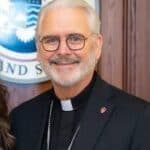
As the United States of America celebrates her 250th anniversary, the president of the United States Conference of Catholic Bishops says that being faithful to the Gospel is the best way Catholics can build up the nation.
And he has a particular American Catholic in mind as a model for that fidelity.
“I think the first thing that comes to mind is just to be the best Catholics that we can be,” Archbishop Paul S. Coakley of Oklahoma City said in response to a question about the role of the Church in America at this milestone. “Our greatest contribution to the well-being of our nation is our own fidelity — to strive for holiness, to live the Gospel, to live the freedom that has come to us from God and to use it responsibly, to build up our brothers and sisters, to build up this land and to contribute in the ways that we can with an authentic patriotism which expresses our love of country.”
Archbishop Coakley spoke with Aid to the Church in Need-USA for the pontifical foundation’s commemoration of the 250th anniversary of the signing of the Declaration of Independence. He said that as the president of the US Conference of Catholic Bishops, he would hope that Americans understand that the message of the Church on this occasion is one of thanksgiving.
That thankfulness includes “gratitude for the people who have gone before us, those who have achieved for us the level of freedom that we enjoy, in a particular way for the religious liberty that we enjoy in this great nation,” the archbishop said.
It is also a time for renewed appreciation of the “rich heritage that we have as Americans and the many ways in which the Lord has blessed this land, and the many people — the peoples that have built this nation from the very beginning, beginning with our Native Peoples but all of the immigrant peoples that have come over the past 250 years and their sacrifices to build a strong union.”
The nation’s history of immigration, too, should certainly be born in mind, he continued. “I think we dare not forget where we came from,” Archbishop Coakley said. “Except for our Native communities, the rest of us arrived here as immigrants. And that’s what strengthened this land.”
And, as perhaps a special message for today, Archbishop Coakley commented, “I think we need to learn to see this phenomenon [of immigration] as not so much a problem as an opportunity that needs to be harnessed and directed wisely.”
First Martyr from America
For many years, Archbishop Coakley has been promoting the cause of canonization of an Oklahoma priest whose life exemplifies many of the values and qualities of which the archbishop spoke in his interview with ACN. Blessed Stanley Rother came from a family whose ancestors had immigrated from Germany and worked hard to build up their community.
Blessed Stanley “in many ways exhibits some of the best of what we are called to be as a nation and as a people,” the archbishop said. “He was a hard-working man from rural America who embraced the faith that was his inheritance, that he was called by God to share with others, and which he did with great generosity.”
Pope Francis in 2016 recognized Rother as a martyr – making him the first martyr from the United States of America.
Born on March 27, 1935, in Okarche, Oklahoma, he grew up on the family farm and attended the local Catholic church that had anchored his family’s faith for generations. Discerning a vocation to the priesthood, he studied at Assumption Seminary in San Antonio, Texas. Academic struggles almost derailed his path to the priesthood, but his bishop saw something in him and helped him get into Mount Saint Mary’s Seminary in Emmitsburg, Maryland. He was ordained a priest on May 25, 1963.
Only a few years later, Rother answered Pope St. John XXIII’s call to send missionaries to Central America and joined the Oklahoman mission in Santiago Atitlán, Guatemala, where he served the indigenous Tz’utujil people. It was there that he was killed on July 28, 1981, after defending his flock from government oppression.
Blessed Stanley was beatified in 2017. In 2023, Archbishop Coakley dedicated the Blessed Stanley Rother Shrine in Oklahoma City, where the martyr is entombed.
A documentary about Blessed Stanley, “American Martyr,” narrated by Martin Sheen, will be released in theaters August 25.
“I think for me part of the attractiveness of Blessed Stanley is his generous spirit in not keeping to himself the gifts that he had received, of being willing to share them with others, even heroically laying down his life for his brothers and sisters in response to his Gospel faith,” Archbishop Coakley told ACN-USA.
The archbishop reported that since building the Rother Shrine, he has witnessed a growing devotion to the priest from Okarche, particularly among seminarians, priests, and men discerning the priesthood. Seminarians see him as somebody who can understand their struggles and challenges, particularly along academic lines. Priests admire his dedication to his parishioners and his heroic witness in laying down his life for his flock, literally.
“I think priests are finding in his witness, his hard work, his willingness literally to roll up his sleeve and get his hands dirty a very attractive model of holiness for them,” Archbishop Coakley said.
As the 250-year “American experiment” and the influence of the United States in the world become subject to evaluation, criticism and debate, a missionary from rural America might just be the kind of role model American Catholics will look to as the nation continues to fulfill its original ideals of life, liberty and pursuit of happiness.
–John Burger