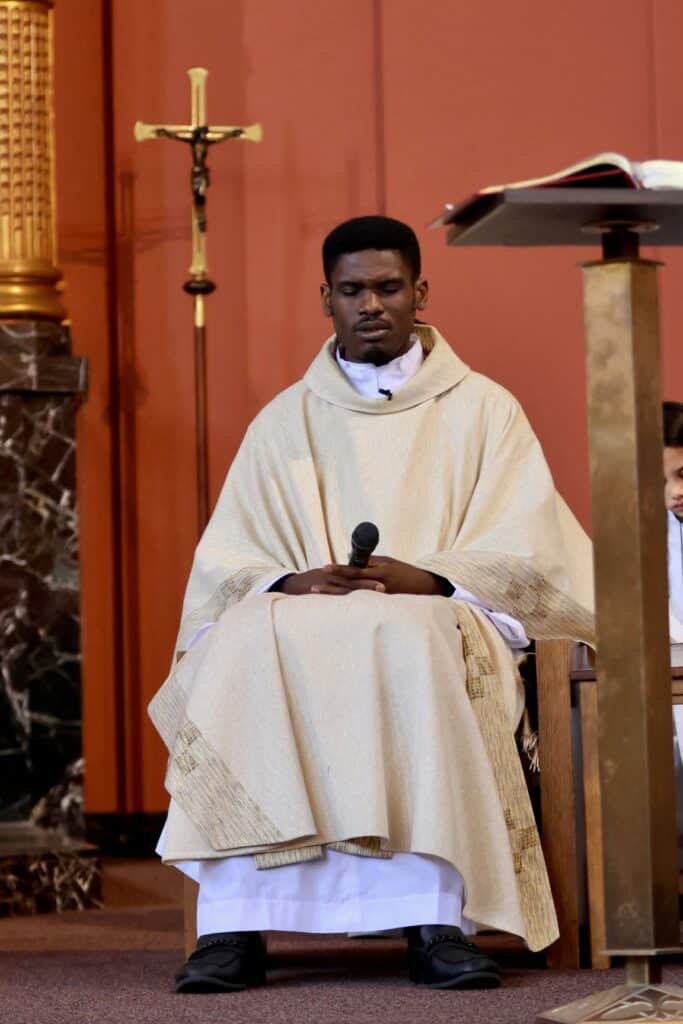
Fr. Stephen Idoko knows firsthand how true, lived religious freedom can strengthen a society.
As a Nigerian priest, Fr. Stephen Idoko was only too familiar with the problems that terrorists created for Christians in his country: Boko Haram, the kidnapping of the Chibok school girls, the ongoing Fulani attacks on Christian communities, and so on.
But the news that reached Fr. Idoko on April 24, 2018, drove that reality home in a terrifying way. It was then that he learned of the violent death of an old friend — a priest who had been a fellow seminarian.
“He was my roommate, Fr. Felix Tyolaha, of blessed memory,” Fr. Idoko told Aid to the Church in Need-USA.
In 2018, Fr. Tyolaha and Fr. Joseph Gor were celebrating an early morning Mass in Ukpo-Mbalom, in Benue State. Suddenly, about 30 Islamist Fulani herdsmen burst into the church and started shooting guns into the gathering. Fr. Tyolaha was fatally shot while he attempting to cover and protect parishioners, 17 of whom lost their lives. Fr. Gor also was killed.
The terrorists went on to the destroy over 60 houses in the local community.
“I couldn’t sleep for days, days. I was traumatized, because I saw the pictures and how Fr. Felix was brutally killed,” said Fr. Idoko, who was at that time serving in Nasarawa State. “It was just past his anniversary of ordination, and he was moved from one crisis area, where some of his parishioners, including a catechist, were killed to a parish whose pastor was leave for further studies.”
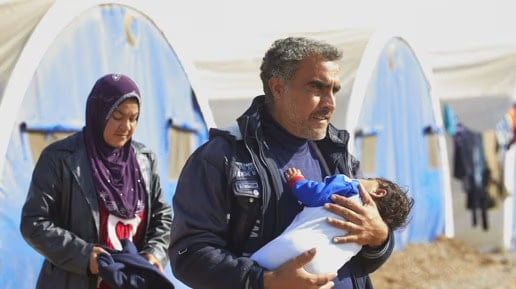
Shortly after this incident, villages near Fr. Idoko’s hometown of Jos was attacked, forcing families to abandon ancestral homes and seek refuge in internally displaced persons (IDP) camps. Many of these families continue to live in uncertainty, often without adequate protection or the assurance that they can safely return home.
Of the slaying of his former roommate, Fr. Idoko commented, “I couldn’t really comprehend how someone with a good heart, someone who was very pious, very faithful to the Church, very devoted and made a lot of sacrifices, would be killed.”
Like Fr. Tyolaha, Fr. Idoko belongs to the Via Christi Society, a missionary group of priests founded in Nigeria. Fr. Tyolaha was ordained in 2016, Fr. Idoko in 2017. Five years ago, the society assigned Fr. Idoko to serve in parishes in the Archdiocese of San Francisco, where he continues today.
The only time he has gone back to his homeland since then was when his mother passed away two years ago.. Unfortunately, the security situation had improved little, and he and the funeral cortege needed a couple of dozen soldiers for protection. “It was almost a five-hour drive, and if you are not fully armed, [terrorists or bandits] could just kidnap you.”
The view from the US
Fr. Idoko said that serving in the United States has “really inspired me in my spiritual life as a priest, to practice my faith well.”
And seeing his homeland with the eyes of someone who has lived in the US has given him a new outlook on the importance of religious freedom.
“Living in the United States has given me a new appreciation for what genuine religious liberty looks like,” he said. “Here, I have witnessed people from diverse religious backgrounds openly practicing their faith without fear of persecution. Individuals are generally free to worship according to their convictions, express their beliefs publicly, and participate in society without being denied opportunities because of their religion. This environment demonstrates how religious freedom contributes to social stability, mutual respect, and national unity.”
As the United States celebrates the 250th anniversary of the signing of the Declaration of Independence, the nation’s historic embrace of religious liberty gives it an opportunity to be a beacon for other nations, especially where persecution takes place, the 39-year-old priest added.
“The United States occupies a unique position in global affairs and possesses significant diplomatic influence,” said Fr. Idoko. “That influence can serve as a powerful force in promoting religious freedom worldwide. Through consistent diplomatic engagement, strategic partnerships, and constructive dialogue with governments, the United States can encourage stronger protections for religious minorities and greater accountability for those responsible for acts of religious violence.”
Of course, that’s important for Fr. Idoko in regard to his home country: “I was particularly encouraged when the United States publicly condemned attacks against Christian communities in Nigeria. Such statements send an important message that the international community is paying attention and that victims of persecution have not been forgotten. While public condemnation alone cannot end the violence, sustained diplomatic engagement, humanitarian assistance, and support for local peacebuilding initiatives can contribute meaningfully toward protecting vulnerable communities.”
For Fr. Idoko, the United States of America represents more than economic opportunity: “It represents the possibility of living in a society where religious freedom is not merely a constitutional promise but a lived reality.”
Said Fr. Idoko, “For those of us who have witnessed the devastating consequences of religious persecution firsthand, America’s commitment to protecting religious freedom serves as a powerful reminder that societies can choose tolerance over hatred, justice over oppression, and hope over fear.”
–John Burger