As secularism grows across the Caribbean, Archbishop Gabriel Malzaire of Saint Lucia believes Christians must rediscover a deeper and more resilient faith – one that goes beyond emotions and passing trends.
The Caribbean islands that form the Antilles may seem like paradise most of the year, but those who live there year-round, like Archbishop Gabriel Malzaire of Castries, Saint Lucia, know the dangers of hurricane season.
“I remember one hurricane in 1980, when I was in seminary. I had been placed in my home parish, and when the hurricane approached, I went to my family house, rather than stay in the presbytery. When I returned, the roof was gone,” Archbishop Malzaire recalled, during a visit to the international headquarters of Aid to the Church in Need (ACN).
“Another experience happened when I was a bishop in the island of Dominica,” he continued. “I was away when it struck, but when I was returning, by boat, I saw a piece of gray and brown rock, and realized it was the island. It had been devastated. I could hardly get into my gate because of the debris and the ceiling in my room had collapsed.”
Just like that, his entire pastoral plan was transformed. “Now it was a question of finding ways to feed people, to care for people, and to minister to them.”
The archbishop noted that Caribbean people are resilient because of their annual experience of extreme weather. “We are faced with this all the time,” he said, “but we have survived.”
From banana farm to seminary
Growing up on the island of Saint Lucia was therefore a mix of the serenity of a simple life and the constant danger of natural disasters, Archbishop Malzaire told ACN.
One of 11 children, he was never alone and rarely idle. “I would describe my youthful days as quite pleasurable, exciting as well, since being part of a big family is an exciting experience. I grew up with both of my parents and came from a very religious family,” he said.
Besides his daily chores on the family banana farm, he was also into sports and school, of course, but the Church was a major part of his life.
“I was 10 years old when I first got that inkling, an interest in the priesthood. One Monday morning, the local priest came in a small car, and I told him that I wanted to be an altar server, and from then I started serving at the altar. I must have served until I was about 18, just after I left high school,” the archbishop recalled.
There were, of course, times of doubt, including uncertainty about whether a native islander — and a black man — would be accepted to seminary. “The image of priesthood in our culture was that a priest was from far away. There were doubts in my mind whether I would be accepted, that kind of thing,” he told ACN.
Clearly those fears were unfounded, and now this native Saint Lucian is one of the highest-ranking clerics in the Antilles, having served two terms as president of the Episcopal Conference, which covers several island nations.
Not all about feelings
The religious landscape has undergone many changes in the years since Archbishop Malzaire entered the seminary. Saint Lucia used to be almost fully Catholic, but now Catholics make up little over 50%, as secularism and evangelical Churches make inroads.
The archbishop understands that working with young people is a particular challenge in these times. “A lot of young people go to universities today, which means leaving Saint Lucia, and there have been changes in people’s mindsets. Often, when we approach the youth, we say that we have to make things exciting for them, to go for their feelings, what is in vogue, what pleases them. But these are things that tend to be very superficial. This is the philosophy on which a lot of church today is based, how we make people feel, and for me, that’s just not enough.”
“I always maintain that if we do what we do well, and we communicate it in a manner that brings depth to the lives of people, then, you know, it is going to happen. Because when we really think about what Christ did for us, it was not a question of feeling. He went all the way to the end.”
When asked about the needs of the local Church in Saint Lucia, Archbishop Malzaire highlights better catechesis, especially for the young, and also a better system of communication for evangelization, which in turn could be used to promote vocations.
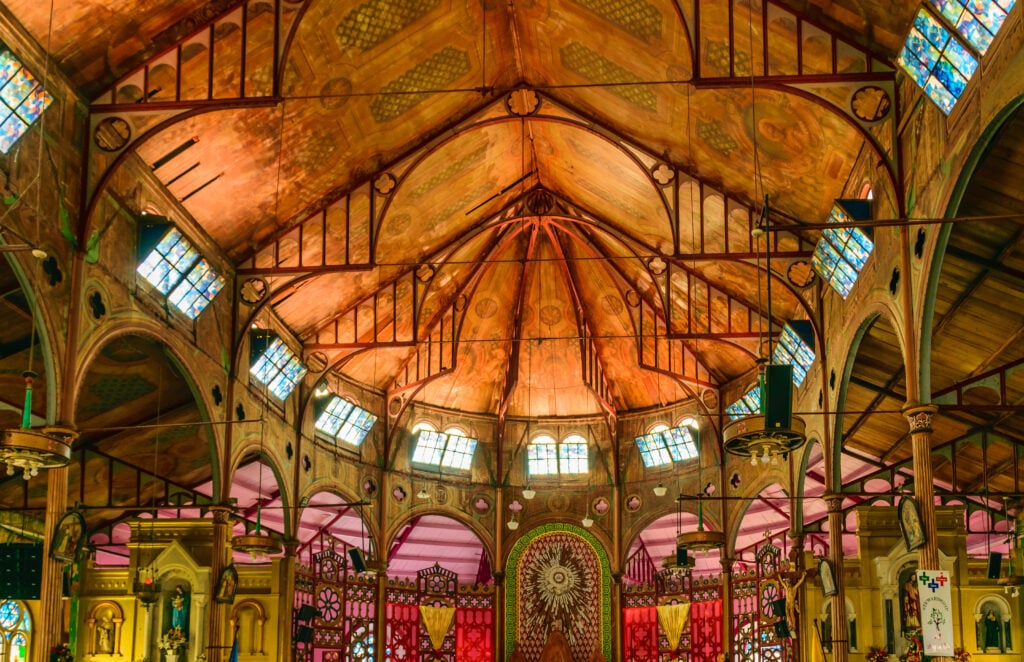
But the archbishop’s overall attitude is summed up in another story from his adolescence: “Every time I visited Castries, the capital, the first place I would go was the cathedral. I remember kneeling every time and saying a very simple prayer: ‘Lord, let your will be done.’ As simple as that. Lord, your will be done. And it remained with me, and I have always felt that God was guiding.”
— Mark von Riedemann and Filipe d’Avillez