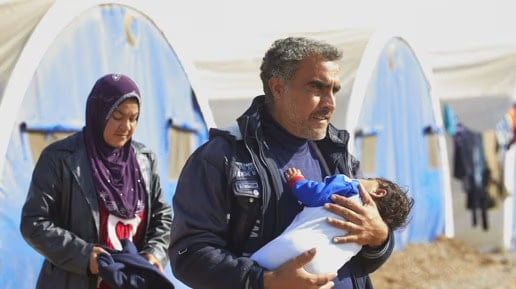
Father José Luis de Menezes speaks to Aid to the Church in Need (ACN) about the origins of the Fazendas da Esperança, or Farms of Hope, a network of rehabilitation centers supported by ACN.
“Our communities are dedicated to salvaging the dignity of people who have been lost to addiction,” said Father José Luís de Menezes, during his visit to the international headquarters of Aid to the Church in Need.
Throughout his conversation with ACN, the Brazilian priest repeated the word “dignity,” a concept which, in this context, he admits, is uniquely Christian. “We see everyone as a child of God. We take them in and care for them, and one of the things we do is try to rebuild a connection with their loved ones. In many cases, we have managed to heal that relationship as well.”
The network of rehabilitation centers began in Brazil – hence the Portuguese name – but includes 170 communities in 27 countries. They are currently attended by about 4,500 men and women who want to escape the slavery of addiction. And according to Father José Luís, since the program was founded by Brother Hans Stapel more than four decades ago, almost 100,000 people have benefitted from it.
A bit of history
Hans Stapel was born in Germany in 1945. One day, his family learned about the work of what would later be called Aid to the Church in Need (ACN), and its mission to provide support to German and Eastern European Catholics who had lost everything because of the war. That meeting had a life-changing effect on Stapel, who went on to become a religious and a missionary himself.
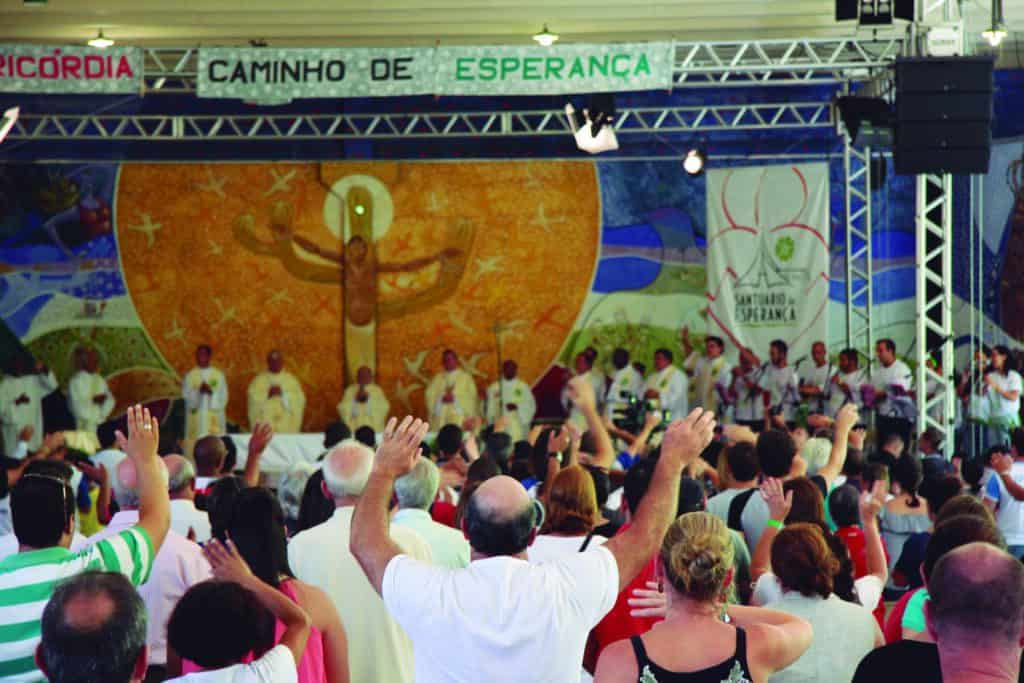
In 1983, he founded the first Fazenda da Esperança in Brazil. From the very beginning, its work with addicts had a spiritual dimension. “All the people we work with tell us the same thing. They say that because of their addiction, they lost their purpose in life; they became distant from God. Through prayer, and through the Gospel, they recover that relationship with God. They find faith and meaning, and that gives them the strength to rebuild their life. This spiritual awakening helps them to begin again,” says Father José Luis.
Farms that are heavy with fruit
Father José Luís is currently president of the Família da Esperança, or Family of Hope, an umbrella organization that runs the Fazendas, but also hundreds of family support groups, and includes many lay volunteers, priests, religious, and even a few bishops who, after retirement, dedicated themselves to the mission of helping addicts.
“The Family of Hope is the soul of the Fazenda,” he explains. There is even a monastery of Poor Clare nuns that prays exclusively for the mission. “This is a special grace, and I think that this prayer is why the community continues to grow, and bear so much fruit.”
Among that fruit is a group of seminarians who are being prepared to serve the project through the priesthood. One of these seminarians is Dimitri, whose road to the Church was winding, to say the least. “Dimitri is currently studying philosophy. He is from São Paulo; he is tattooed and used to be a punk. He did drugs, and all the rest of it, and the addiction led him to rock bottom. When his parents tried to get in touch with him again, he asked for help. He did his recovery with us, and then, once he was well again, he worked as a volunteer at a Fazenda in Guatemala for three years. During that experience, he noticed that there was a lack of priests, and asked why he should not become one. This was one of three current vocations that were born from our movement,” Father José Luís says.
Like Dimitri, all people who go to the Fazendas have to freely ask for help. “We offer a voluntary treatment. There are organizations that do compulsory treatment, but we don’t. So, the first thing we do is an interview, and we ask the person to write a letter, committing to the program, and this makes it much easier and much more successful.”
“Look for help!”
Father José Luís’s advice to family members of people suffering from addiction is to seek external help. “They can look on the internet, or through the Church, through the parish. There are many organizations besides ours. They will find a lot of solidarity, because that is a mark of those who have gone through this. Furthermore, they will need that support until their loved one finally asks for help. It is always easier to go through this with people who have already had the experience, because there is a serious risk of co-dependency, where the addict drags his family down with him. You need help and support to avoid that trap and finally rescue your loved one.”
In the case of the Fazendas da Esperança, much of this support comes from the laypeople, and sometimes entire families, who have left everything to help those suffering from addiction. But for this dedication to be whole, the movement has to provide for their livelihood. “That is why we have come to ACN. Our relationship dates back to our respective founders, and ACN has helped us several times with building or refurbishment projects and so on. But at the moment, our main concern is providing for those who are fully dedicated to this mission, to this service, and we are talking about how we can ensure their livelihood, so that they can feel secure in their gift of themselves to salvaging the dignity of so many of our brothers and sisters.”