The Church’s vast charitable work in India could be at risk if lawmakers tighten the already restrictive law on foreign funding of NGOs.
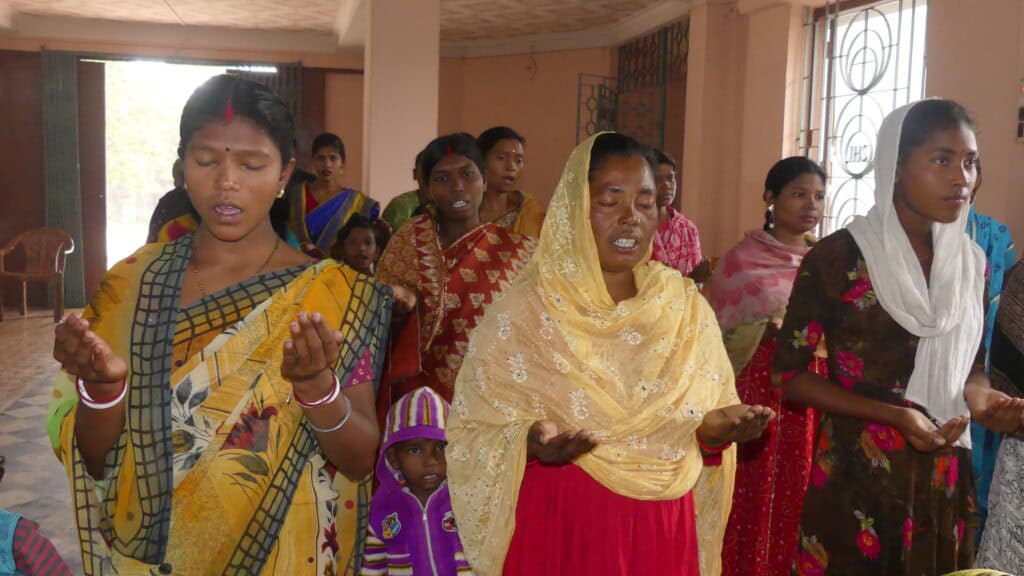
Christians all over India are preparing for a day of prayer on Sunday, June 28, due to their concern over proposed legislation that could have a negative impact on the Church’s mission.
The Foreign Contribution Regulation Act (FCRA) Amendment Bill 2026 is set to be discussed during the next session of the federal parliament. It includes proposed changes to the FCRA, which was initially enacted in 1976, amid concerns that foreign agencies were sending money into India to subvert “national interest.”
In 2020, the law was made significantly more restrictive by the Indian government, with criteria for rejecting registration of non-governmental organizations (NGOs) being broadened to include “anti-developmental activities,” “inciting malicious protests,” and “forceful religious conversions.”
Since the 2020 changes, the law has been used to cancel the registration — or deny the renewal of registrations — to thousands of NGOs.
The proposed amendment would not only further tighten the criteria for NGOs, but would also allow the state to seize the funds and assets of NGOs that are dissolved, and could even be applied retroactively, so that private institutions such as schools, hospitals, clinics, or others that were built with foreign funding over decades, might be handed over to a new “designated authority” created by the central government, which would, de facto, mean that they would be confiscated.
Considering the scope of Christian charitable work in India, Churches are deeply concerned that the new law will make their charitable work even more difficult. In India, Christian institutions serve a far larger proportion of the population than the size of the Christian community itself would suggest. For example, Christian schools provide education to around 10% of all Indian students, many of them coming from vulnerable families. Work in the field of health is equally significant. The Catholic Health Association of India, for example, serves around 21 million of India’s poorest and most marginalized people every year.
Therefore, according to a letter released by the Catholic Bishops’ Conference of India (CBCI), the bill “has raised concerns regarding its possible implications for the charitable, educational, healthcare, and social ministries carried out by Churches and Christian institutions across our country. The Church in India has consistently served society, particularly the poor and the marginalized, as an expression of the Gospel values of love, justice, and compassion.”
The circular, signed by CBCI president Cardinal Anthony Poola, calls on all Catholics to join with other Christians in praying for a just outcome. “I therefore request that Sunday, June 28, 2026, be observed throughout the Catholic Church in India as a National Day of Prayer. During the celebration of the Holy Eucharist, special intentions may be offered for our nation, for those entrusted with public responsibility, and for the freedom of the Church to carry out her mission of service. Where appropriate, Eucharistic Adoration, the Rosary, prayer services, and voluntary fasting may also be organized. Parishes and institutions may also consider organizing ecumenical prayer gatherings in collaboration with other Christian communities.”
“As responsible citizens, let us continue to work for peace, justice, harmony, and the common good of our nation,” the statement reads, while encouraging communities to write to their elected representatives, expressing their concern over the potential negative impact of the proposed amendments.
ACN calls on all its friends and benefactors to remember Indian Christians in their prayers over the coming weeks, especially during this National Day of Prayer, so that any legislative reforms may protect the freedom of the Church to continue its service to the poor and the marginalized.
– Filipe d’Avillez