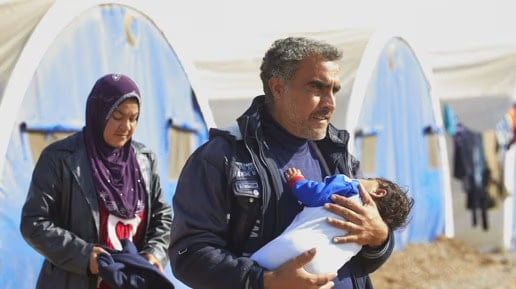
Missionaries, priests, and women religious in Mozambique have had to flee t towns and villages and find safety in the cities, which are currently overwhelmed by displaced people.
According to information from missionaries on the ground, attacks by armed insurgents continue to hit the province of Cabo Delgado in northern Mozambique. The activities of Islamic insurgent groups have intensified in the region, creating an atmosphere of fear and insecurity.
The insurgency in northern Mozambique began in 2017, but attacks have increased this year. In the last few days alone, there have been several raids on towns and villages, and people have been kidnapped and killed.
On February 9th, the terrorists, who claim allegiance to the Islamic State, attacked three communities near Mazeze, 60 miles south of Pemba, the capital of Cabo Delgado. “Churches were burned, as were the homes of the population,” says a local missionary, who asked not to be identified for security reasons. The attacks, along with rumors of others in neighboring locations, led to the displacement of hundreds, who, in many cases, walked through the bush for long distances to find refuge in Pemba or in the nearby city of Chiúre, causing overcrowding.
A female missionary, who also asked not to be identified, said the terrorists destroyed houses and churches in several villages and are now “spread throughout the southern and central districts” of Cabo Delgado, though “the final goal of the movements or attacks are not clear yet. The situation is very, very complicated.”
“Many missionaries have also been displaced,” a local priest told ACN. This priest moved to Pemba, the center of the diocese, as did sisters who lived in the area. Other missionaries are following suit to protect themselves, but also to protect the population, the priest confirmed. When priests or sisters remain in a village, people often feel safe and decide to stay, which can leave them exposed in attacks.

Bolder methods
Initially, the insurgents mostly targeted military or government structures, as well as villages and civilian communities, and did not discriminate between Muslims, who are the majority in this part of Mozambique, and Christians. However, over the past couple of years, there have been reports of attacks on, and cases of jihadists separating Christians for execution.
“The village that was attacked in the Chiúre region had already been attacked about two years ago, but the religious issue doesn’t only hurt Catholics,” said the local priest who spoke to ACN. “They have not limited their attacks to villages with Christian churches. As always, they attack absolutely everything, including churches, but also mosques, and they especially target the population and their houses.”
Besides an increase in the number of attacks, the terrorists also seem to be bolder in their methods. In a January attack on the town of Mucojo, rather than destroying houses and fleeing back into the bush, the jihadists remained for at least two days, despite the nearby presence of the armed forces of Mozambique, and of other allied countries that are trying to help stem the violence. Just over a week later, on January 31st, terrorists ambushed a military convoy, killing two Mozambican soldiers.
The insurgency in Mozambique has already caused at least five thousand deaths and the displacement of over a million people, although these numbers are dated, and the current figures are probably higher.
The Catholic Church is deeply involved in supporting the displaced people in northern Mozambique and in trying to find a peaceful solution to the conflict, having been critical of both the terrorists and the government’s heavy-handed response.
Mozambique, especially the Cabo Delgado region, is a priority country for ACN on the African continent. The international charity has supported several projects there, including pastoral assistance and psychosocial support for victims of terrorism, as well as the supply of materials for the construction of community centers and the acquisition of vehicles for missionaries who work with families fleeing violence.