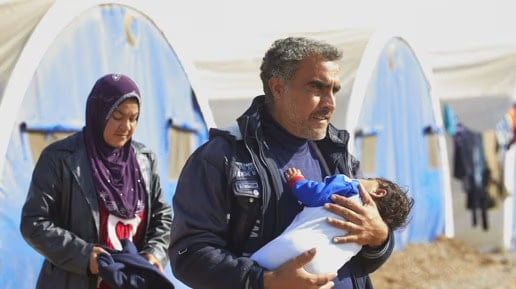
In the summer of 2014, Yohana Yaqoob Abdeesh Al-Zeebaree was a 12-year-old boy when his world turned upside down. From his home in Duhok, a city in northern Iraq, he recalls the whispers spreading across neighborhoods: ISIS was moving closer.
“There was this huge scare,” said Al-Zeebaree, a Chaldean Catholic who is now 23. “I remember the night when they said ISIS got close to the northern cities, like Erbil and Duhok. Everyone was watching the news, and we got multiple phone calls from our relatives telling us to leave town and go further north.”
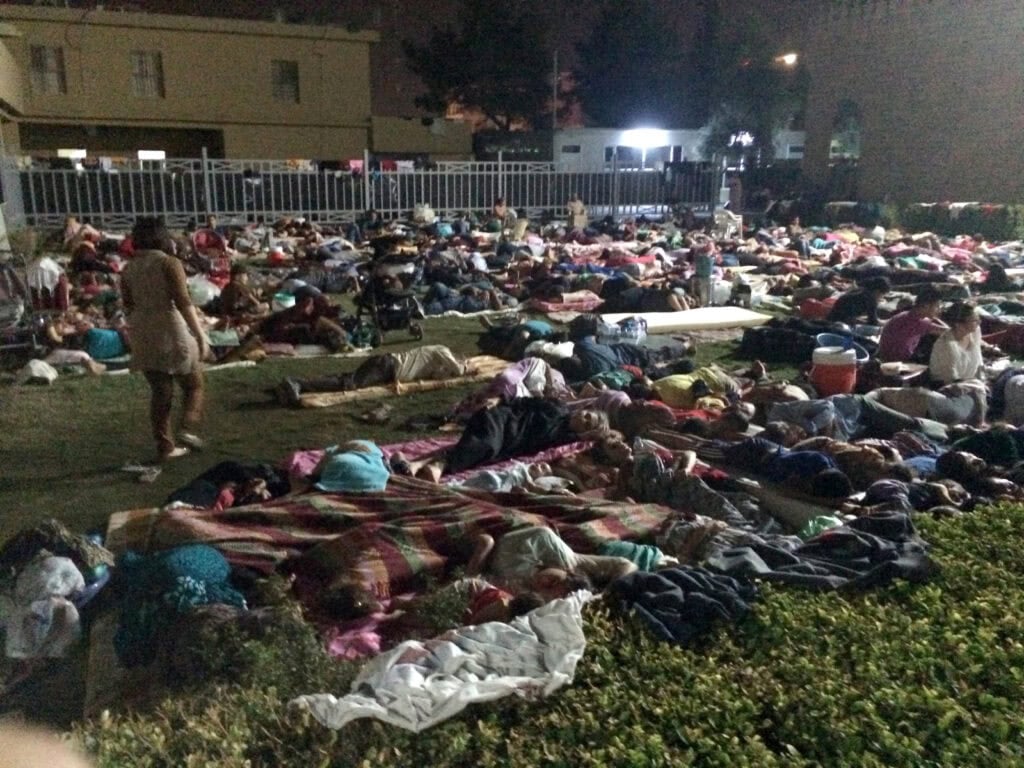
While Erbil and Duhok never fell, Mosul—just a short drive away—was taken. The Nineveh Plain, home to some of Iraq’s most ancient Christian communities, was overrun. Hundreds of thousands fled, swelling Erbil’s refugee camps. Churches became shelters; classrooms turned into dormitories; streets filled with families who had left everything behind but their faith.
Amid this chaos, the Chaldean Archdiocese of Erbil, led by Archbishop Bashar Warda, recognized that families needed more than shelter and food. They needed education and hope for the future. In 2015, the Catholic University in Erbil (CUE) opened its doors as Iraq’s first private nonprofit university.
Next week, as the university graduates its fifth class, it also celebrates its 10th anniversary — a milestone born of resilience and faith.
CUE and ACN
After CUE’s initial construction was funded by the Italian Bishops’ Conference, Aid to the Church in Need (ACN), a papal charity, followed with funding for new wings for architecture and medicine, laboratories, and a modern library. Between 2018 and 2019 alone, ACN-USA contributed more than $1.8 million.
What began with 11 students has grown to more than 760. About 65 percent of the student body study on full scholarships, most of which are funded by ACN.
“Our donors, who are so dedicated to standing up for persecuted Christians, proved themselves to be very generous when it mattered most,” said George J. Marlin, chairman of ACN-USA.
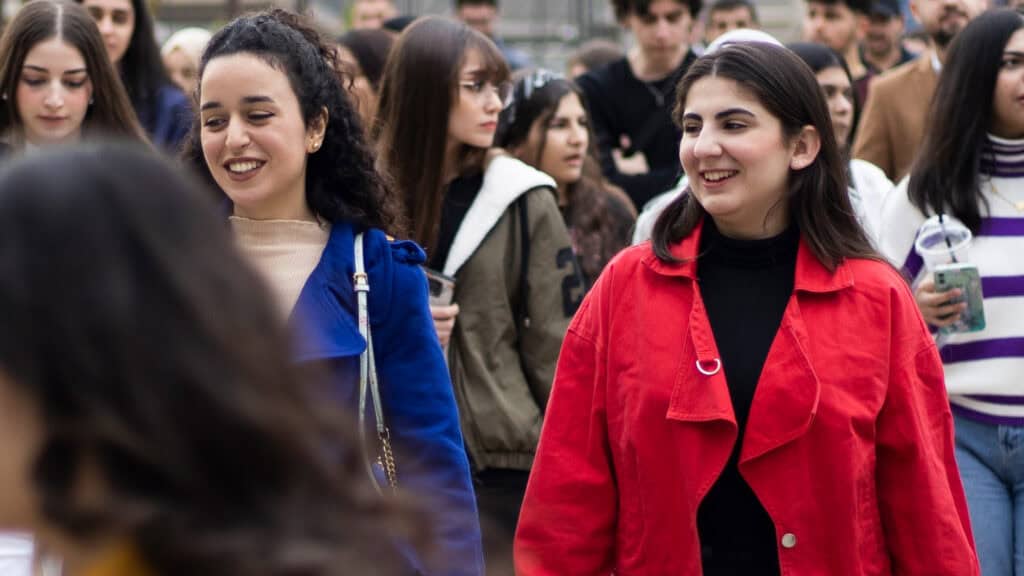
“And today, the Christians of Iraq are reaping the fruits of that generosity. Iraq will as well,” Marlin continued. “For a community that now accounts for less than 1 percent of the population, because of years of persecution, Iraq’s Christians can and must have significant influence on the direction of the nation. CUE will provide a major boost in that regard.”
Marlin’s words echo Archbishop Warda’s conviction that education is a foundation for resilience. “If parents know their children will be educated,” Warda has often said, “then they are more likely to remain in Iraq.”
Bringing communities together
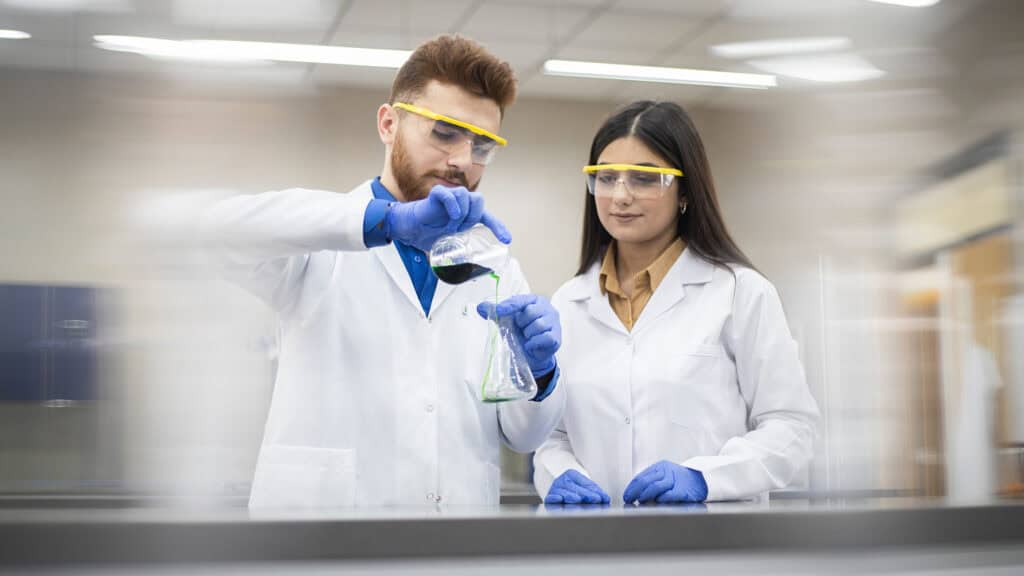
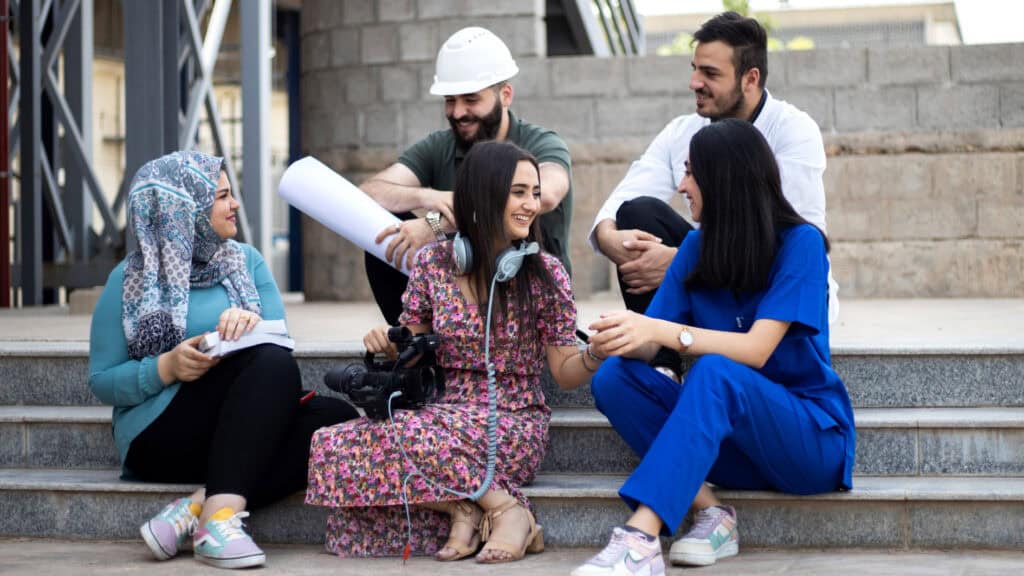
While CUE is rooted in Catholic tradition, its doors are open to all. About 60 percent of its students are Christian, 30 percent are Muslim, and the rest belong to smaller groups such as the Yazidis. In a country where religious and ethnic divisions often run deep, the campus offers a rare example of daily coexistence.
“When you go to the villages, you see the Christians on one side and Muslims on the other,” says John Smith, an American engineer and university trustee who volunteers with ACN. “But at the university, you see kids of all backgrounds just having fun together, being mutually supportive. I think it’s creating an environment for people to learn to coexist. If we can get a critical mass of people who think and behave like these students are, I think it will make a difference in the future.”
The university’s provost, Fr. Karam Shamasha, sees the importance of not just academics, but of social relationships: “We really want to be a light in society. Not just providing education, but peacebuilding.”
From dream to realization
Looking back, it is remarkable how far the university has come in just a decade. When construction began, ISIS still controlled much of the Nineveh Plain and IDP camps dominated the landscape around Erbil.
“ISIS was still in control, and the future was so uncertain,” remembers Regina Lynch, executive president of ACN International. “In the midst of this, several small buildings were constructed to begin CUE. Now, as more and more students graduate and go to work in various parts of Iraq, the values they learn there will continue to positively influence the future of Iraq.”
That influence is already visible. Graduates are working in hospitals, non-governmental organizations, international companies, and local businesses. Some have started their own initiatives, bringing innovation and hope to communities that once felt abandoned. Others are continuing their studies abroad but remain tied to Iraq through family and faith.
And now, in 2025, the Catholic University in Erbil is not only educating the next generation but also nurturing peace and resilience in a land still scarred by conflict. Its story is proof that even in times of despair, education can be a candle of hope in the darkness.
— John Burger