
In the year 1212, the young and beautiful Chiara Offreduccio di Favarone slipped quietly out of her wealthy parental home, leaving behind her loved ones, her safety, and her comfort, in order to embrace a life of poverty, chastity, and obedience and give the rest of her life to her bridegroom Jesus Christ.
She had been “infected” by the ideals of Saint Francis of Assisi, and so her horrified family were faced with a fait accompli. She had her hair cut off, to show that she had irrevocably chosen this life of radical imitation of Christ. In those days, it was not unusual for a young woman to enter a convent, but for a young woman from a noble family, it would have had to be a life reflecting her social status. To choose a life of utter poverty was something novel and shocking.
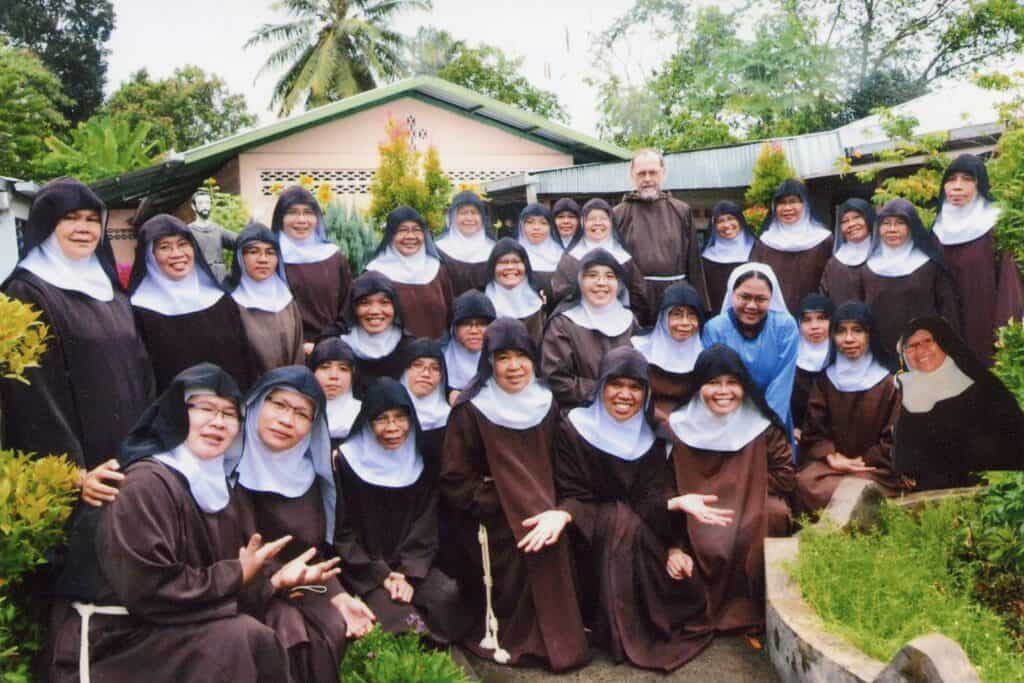
Yet very soon, other young women joined her, and she herself would later be renowned throughout the world as Saint Clare of Assisi, the foundress of the Poor Clare nuns.
The outstanding feature of the Poor Clares is that it is not only the individual sisters who renounce all personal possessions, but that the community itself should be poor and possess nothing.
Today, sisters from all over the world continue to follow the ideals of Saint Clare. They do here in Indonesia, too. This nation of thousands of islands is also the most populous Muslim nation in the world, with a population of 272 million souls. Christians account for just 10 percent of the population, and Catholics just three percent. But there are many reasons for hope and joy – for this nation of Southeast Asia rejoices in an abundance of religious vocations.
The convent of the Poor Clares in Gununsitoli, on the island of Weetebula in eastern Indonesia, is likewise blessed with numerous vocations. So it was that in 2017, they were able to set up a new foundation, with 10 sisters in Sibolga. ACN helped with this project, thanks to the support of our benefactors.
The sisters live a strict life of prayer and penance, entrusting the needs of the whole world to God and striving to support themselves by the work of their hands. Sister Maria Coleta Simamora tells us, “We live from day to day in great simplicity, but full of joy.”
In order to support themselves, they make candles and liturgical garments, and produce hosts for the Eucharist. But they only have very simple equipment at their disposal, which makes their labor difficult and painstaking. So they have asked our help to provide a better equipment for their candlemaking and liturgical garment-making, including professional sewing machines and better molds for candlemaking. We have promised them $17,918.
Will you join us in helping these sisters in Indonesia?
318-06-39