Priests who lived and worked with future Pontiff share thoughts on their Augustinian confrere’s upcoming visit to Peru.
Two priests who lived and worked with the future Pope Leo XIV in Peru, as well as an American lay missionary in the Peruvian Amazon, said that the Pontiff will find a changed country when he visits there this month.
Leo is set to return to Peru, where he was a missionary and a bishop for much of his priesthood, as part of his first apostolic journey to Latin America. The trip begins Nov. 6 in Uruguay and continues to Argentina Nov. 8. The Pope will arrive in Peru Nov. 11 and return from there to Rome Nov. 17.
On Leo’s schedule in Peru, among other things, is a vist to the Diocese of Chiclayo, where he was bishop from 2014 to 2023; a “meeting on the challenges and hopes for the future of the Peruvian people;” a prayer vigil with young people and college students, and a meeting with missionaries and representatives of the Amazonian Peoples.
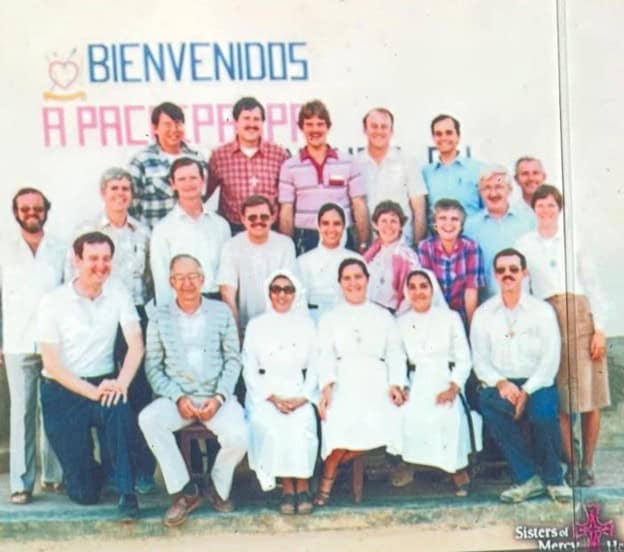
Augustinian Fr. Arthur Purcaro, Assistant Vice President for Mission and Ministry at Villanova University, worked in Chulucanas, in the north or Peru, beginning in 1975. During part of that time, Augustinian Fr. Robert Francis Prevost — who is now Pope Leo XIV — served as chancellor of the Territorial Prelature of Chulucanas.
People who lived in the area were serving barely made enough to support themselves. Now, Fr. Purcaro said, there is a higher level of material well-being, and “less of a reliance on God, more reliance on my work producing what my family needs.”
“Certainly, the challenge that [exists for the Church today] I would say is a secularization,” said Fr. Purcaro, who left Peru 11 years ago but visits periodically.
In recent years, many people have chosen to have fewer children, he noted, and those fewer children are getting more of a formal education but lack training in the faith. Parents spend more time outside the household working, and as a result their children feel less love, he said.
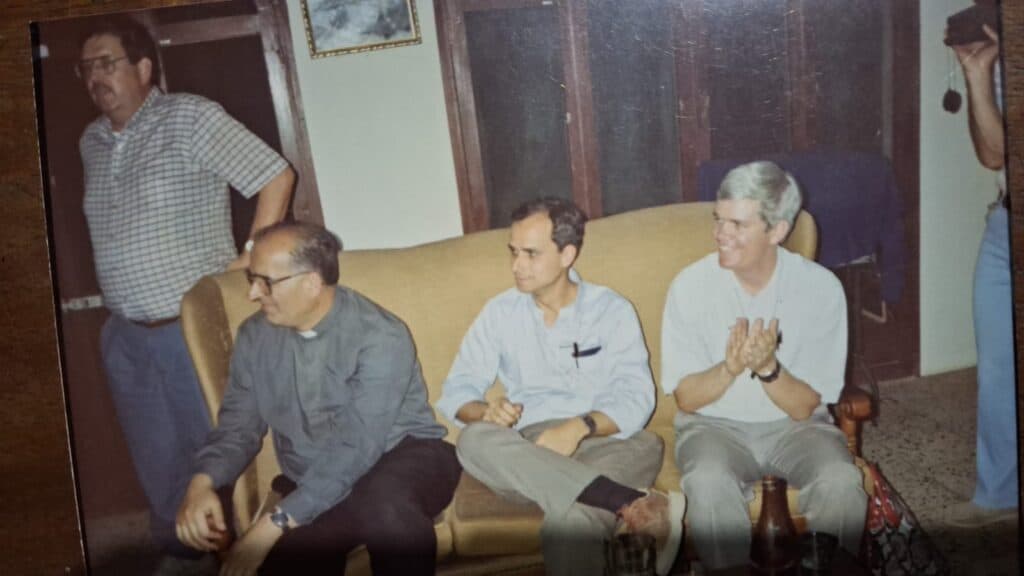
Augustinian Father John J. Lydon agreed that Peru has experienced increased secularization, “especially with the more elite or educated university type of people. You see that in the cities.” Fr. Lydon lived and worked with the future Pope Leo in Trujillo, training Peruvians who felt called to the Augustinian religious life. He went on to serve as president of the Catholic University of Trujillo and is now director of the Mother Cabrini Institute on Immigration at Villanova, but returns regularly to Peru to teach in the Augustinian novitiate.
“I think part of the challenges that the Church faces in Peru is the enormous increase of people leaving life in the mountains for the cities,” said Fr. Lydon. In the more rural areas, he said, “there was much more sense of community and faith.” The cities are growing and growing “in precarious ways,” and migrants work very long hours eking out a living. They “occupy deserted land on the hillsides out into the deserts, and there’s not a presence of the Church.”
“So you’re much less opportunity to participate in a community of faith,” Fr. Lydon said.
The Augustinian priests spoke with Aid to the Church in Need USA in separate interviews in October. Aid to the Church in Need has supported projects in Peru, including the formation of seminarians, missionaries, and catechists. As Bishop of Chiclayo, the future Pope would write to express his gratitude for the pontifical charity’s support.
Cultural Catholics
Also reflecting on what Pope Leo might discover when he visits Peru was Robert Erisman, a founder of the Francis Institute, which trains native missionaries in Peru and other countries. The Minnesota native and his family lived and worked in the San Martin region of Peru beginning in 2019 but are now moving to establish a new mission in Costa Rica.
If the burgeoning cities are full of migrants with little access to pastoral services, as Fr. Lydon indicates, the area where Erisman and family have ministered has even greater challenges.
“We lived in the District of Picota, which is 124 towns or pueblos, and there’s two priests from Spain for all 124 of those towns,” he said. “So there’s a great scarcity of the sacraments, as you can imagine, but they’ve done a really good job of raising up animadoras, which is basically catechists. They do the Service of the Word in the pueblos every Sunday and the catechism classes and the sacramental prep. They are kind of the backbone of the mission.”
But there are villages that rarely see a priest. “The priest or the bishop will go there once a year, and everybody will receive the sacraments at that same time,” Erisman said.
According to the Vatican, over 91% of Peru’s population is Catholic, but in Erisman’s view, many people identify as Catholic but have not been baptized and don’t attend Mass. “They don’t really know anything about Jesus,” he said. “I’d say the majority of people in our area culturally identify as Catholic but are not practicing Catholics.”
In spite of all the drawbacks, Fr. Purcaro said he still sees solidarity as a “tremendous characteristic of the people.” And Fr. Lydon acknowledged that Peru still has a society that is more Catholic than that of Uruguay, one of the other countries on Pope Leo’s itinerary.
All three persons interviewed agree that there is great anticipation about the impending papal visit—or, some will say, homecoming.
“They’re so excited,” Erisman said. “You know, Pope Leo was in Peru for so long, so, to the people in Peru, they have a Pope who is from Peru–the first Pope from Peru.”
–John Burger