The Catholic bishops of Mexico have marked the centenary of the “Calles Law,” which imposed restrictions on the life of the Church and placed priestly ministry under state control in Mexico, with a message entitled “The church bells fell silent; their blood spoke” and subtitled “In memory of our martyrs, religious freedom and peace-building.”
The law came into force on July 31, 1926, and, as the Mexican bishops recall, “faced with the impossibility of freely exercising their ministry,” their predecessors decided to suspend public worship in all the country’s churches. “At dawn on August 1, 1926, Mexico awoke without public Masses: the churches remained open and silent, guarded by the faithful themselves. Thus began one of the most painful chapters in our history,” they explain.
The text pays tribute to the witness of the martyrs, who died while forgiving their executioners, and emphasizes that they learned “at a very high price” that “religious freedom is not a privilege of the clergy, but a right of every human being, and that its denial always ends up costing blood.”
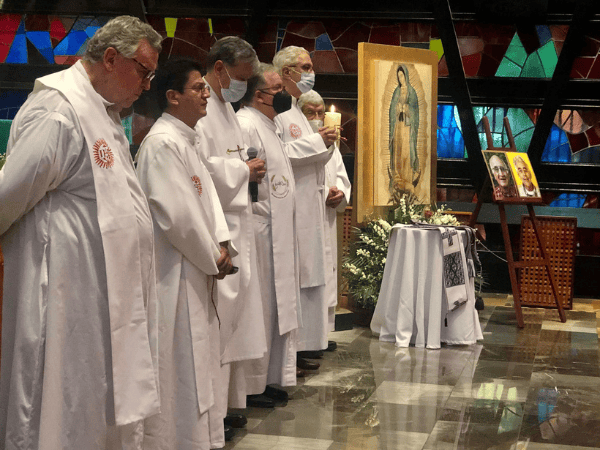
Photo credit: Society of Jesus (Jesuits) Mexico
While acknowledging the legislative reforms and the positive steps that have been taken since then, they state that today, Mexico still lacks full religious freedom. According to the bishops, “restrictions persist that are not befitting of a mature democracy.”
The cite, for example, “restrictions on ordinary religious practice outside places of worship, the inability of religious associations to obtain radio and television licenses, restrictions on parents’ freedom to choose their children’s religious education in the face of the imposition of non-consensual educational models, and an attitude on the part of the political class that has failed to embrace the new constitutional culture of religious freedom, persisting in a climate of mistrust and preventing believers from defending and living out their beliefs in the public sphere.”
But it is “even more serious when the State allows organized crime to become a parallel government that controls territories, where all human rights are disregarded,” they continue. “It kidnaps, extorts, murders, and warps the consciences of young people. This climate of widespread violence affects the whole of society and also prevents some communities from freely practicing their faith. The blood of priests murdered whilst carrying out their ministry — including our Jesuit brothers from Cerocahui, Father Marcelo Pérez in San Cristóbal de las Casas, and others — shows that the list of martyrs did not end in 1929.”
This concern is echoed by the findings of the 2025 Report on Religious Freedom published by the pontifical foundation Aid to the Church in Need (ACN), which specifically highlights an increase in religious discrimination in Mexico due to organized crime. “Priests have been murdered for speaking out against violence or refusing to collaborate with armed groups,” the report states.
Between 2023 and 2024 alone, three priests were murdered, and there were five cases of aggravated assault. Throughout President Andrés Manuel López Obrador’s six-year term, from December 2018 to September 2024, 10 priests were murdered and a further 10 were victims of violence. During the same period, nearly 900 incidents of extortion – including kidnappings, robberies, and intimidation – were recorded against members of the Church, along with an average of 26 attacks and acts of desecration against places of worship each week.
The report notes that at present, “in the absence of state action, in areas dominated by organized crime, religious leaders are speaking out against violence and taking on the role of protectors of their communities. This makes them targets, with the aim of instilling fear and silencing the inhabitants of these towns, which in turn allows criminal groups to continue trafficking in arms and drugs.”
The promotion and defense of religious freedom is one of the cornerstones of ACN’s work, and the foundation stands by the Mexican bishops in their appeal to the government. ACN currently has an ongoing petition called “Protect the Right to Believe: A Global Call for Religious Freedom,” addressed to global leaders, calling for the strengthening of protection and promotion of this fundamental human right. The full text of the petition can be read here, and it can be signed here.
– Javier Martínez-Brocal