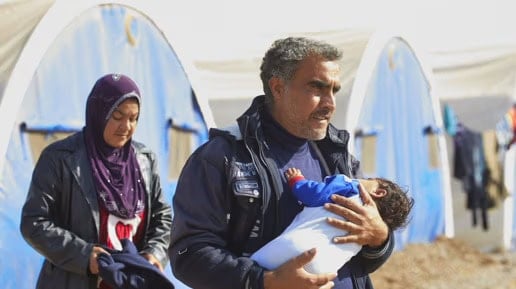
The Catholic Church plays an outsize role in the services it provides in Egypt, especially in the poorer regions, but its faithful continue to face difficult challenges as a minority within a large country.
The Eparchy of Luxor has approximately 25,000 Catholics who are served by 37 priests and 70 women religious. The Eparchy also covers the Red Sea coast, which is an important tourism hub and has been attracting foreign tourists and internal migrants looking for better jobs.
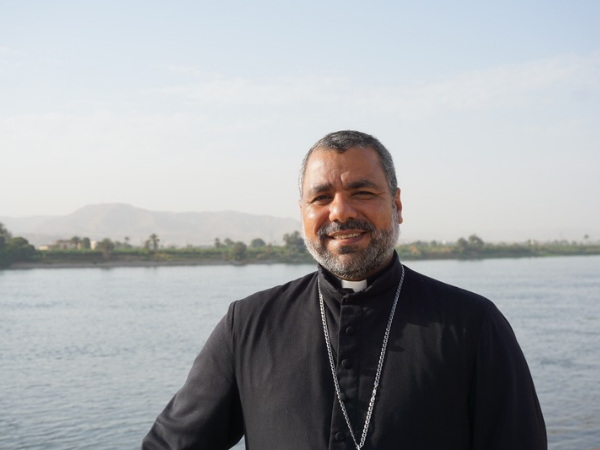
During a visit to the international headquarters of Aid to the Church in Need (ACN) in Germany, Bishop Emmanuel Bishay of Luxor says the Church has been struggling to provide pastoral accompaniment to an increasingly numerous and dispersed population.
The largest Christian denomination in Egypt is the historic Coptic Orthodox Church. Though there are no official numbers, estimates point to between 10 and 15 million Copts in the country, making it the biggest Christian community in the Middle East, by a large margin. Muslims make up the vast majority of the rest of Egypt’s 120 million people.
The Catholic Coptic Church, on the other hand, has only around 300 thousand faithful living in Egypt, but according to the Bishop Bishay, they are playing an important part in forging good relations between different religious communities and also for their contributions to health, education, and culture.
“As one travels farther into Upper Egypt, people can be somewhat more rigid in their attitudes. We make every effort to build relationships with the Orthodox community and with Muslims, who are the majority, even if we encounter some difficulties, especially in villages and small settlements,” Bishop Bishay explained.
“At the official level, relations between the Catholic and Orthodox Churches are good. There is affection, and people exchange greetings on religious occasions. Unfortunately, if a young Catholic man or woman marries an Orthodox person, they may be required to become Orthodox and to follow the Orthodox Church’s requirements. This is a major challenge for us as a Church: how can we help our young people deepen their Catholic faith and remain attached to their Church? I believe that the formation we provide, especially through catechesis, is an important service. We also create many opportunities for young Catholics to meet one another,” Bishop Bishay told ACN.
A few years ago, in a landmark decision, the Catholic Church adopted into its calendar the celebration of the Coptic Martyrs who were killed by jihadists in Libya in 2015, even though they were all Orthodox. Bishop Bishay said that all Catholics are proud of their example, and that Christians in Egypt generally are always ready to make the ultimate sacrifice for their faith.
Regarding relations with the Muslim community, the bishop does not deny that there have been difficult periods, but said that the situation has improved over the past years. “The hard-line voices that used to be heard are no longer as prominent, while another voice — the moderate one — is growing. The change is slow but noticeable: people are listening to those with moderate views, and the government is giving them room to act. The process is moving in this direction. I believe that if Egypt continues along this path, things will keep getting better.”
A pioneering Church
“The Catholic Church is small in numbers but strong in services. Some of the best schools in Egypt are Catholic schools, and the fact that state officials regularly turn to Catholic schools is evidence of this. We also work in healthcare. Our diocese alone has 14 clinics, most of which are staffed by religious sisters who devote much of their time to this work. Another contribution is through cultural centres and libraries,” Bishop Bishay explained.
“The Catholic Church has not only provided these services; it has also shown Egyptian society how to provide them. The Coptic Orthodox Church learned to provide them from us and, more recently, mosques have also begun providing services of this kind, following our example. The Catholic Church has been a pioneer in this field.”
These services are particularly important in the Eparchy of Luxor. “Upper Egypt receives less attention than the Delta and the north of the country, which means that services are less adequate, particularly in healthcare. Hospitals do not always meet the required standard, and there are also shortcomings in education and childcare. This requires a great deal of effort from us as the Catholic Church.”
“The figures indicate that we are among the poorest governorates in Egypt. This affects people’s abilities and talents, whether intellectual or otherwise. It saddens me to see talented people whose abilities are not given their due, or whose surroundings do not give them the opportunity to develop and fulfil their potential,” the bishop said.
ACN continues to support the Catholic Church in Egypt in many different fields, a fact for which Bishop Bishay expressed great gratitude. “ACN is a very important support for us. What is especially valuable is that the foundation looks at our priorities, rather than impose its own agenda. That is very important!”
– Filipe d’Avillez and Eugenia Urgellés